

How much does it cost to fell a tree? When you investigate tree felling price in Vestfold, the short answer is that the cost depends on the tree's condition, location, working method, and desired follow-up work. A professional tree inspection provides the necessary basis for assessing whether the tree should be felled, how the work can be carried out safely, and which services should be included.
Two trees of the same height can require very different amounts of effort. One tree may stand in an open area with good access, while another stands close to a house, over a fence, or near a heavily used thoroughfare. Therefore, it is difficult to determine a precise price based on height or a single photo alone.
An on-site inspection also makes it possible to assess alternatives to complete tree felling. In some cases, pruning, crown reduction, or stabilization can solve the problem while preserving the tree. The goal is to choose a professionally justified measure that addresses safety, tree health, use of the area, and aesthetics.
What affects tree felling price in Vestfold?
The price of tree felling is determined by the overall scope of work. The size of the tree is relevant, but location and condition often matter just as much. In addition, access, the need for stabilization, and what is to be done with branches, the trunk, and stumps after the tree is taken down must be considered.
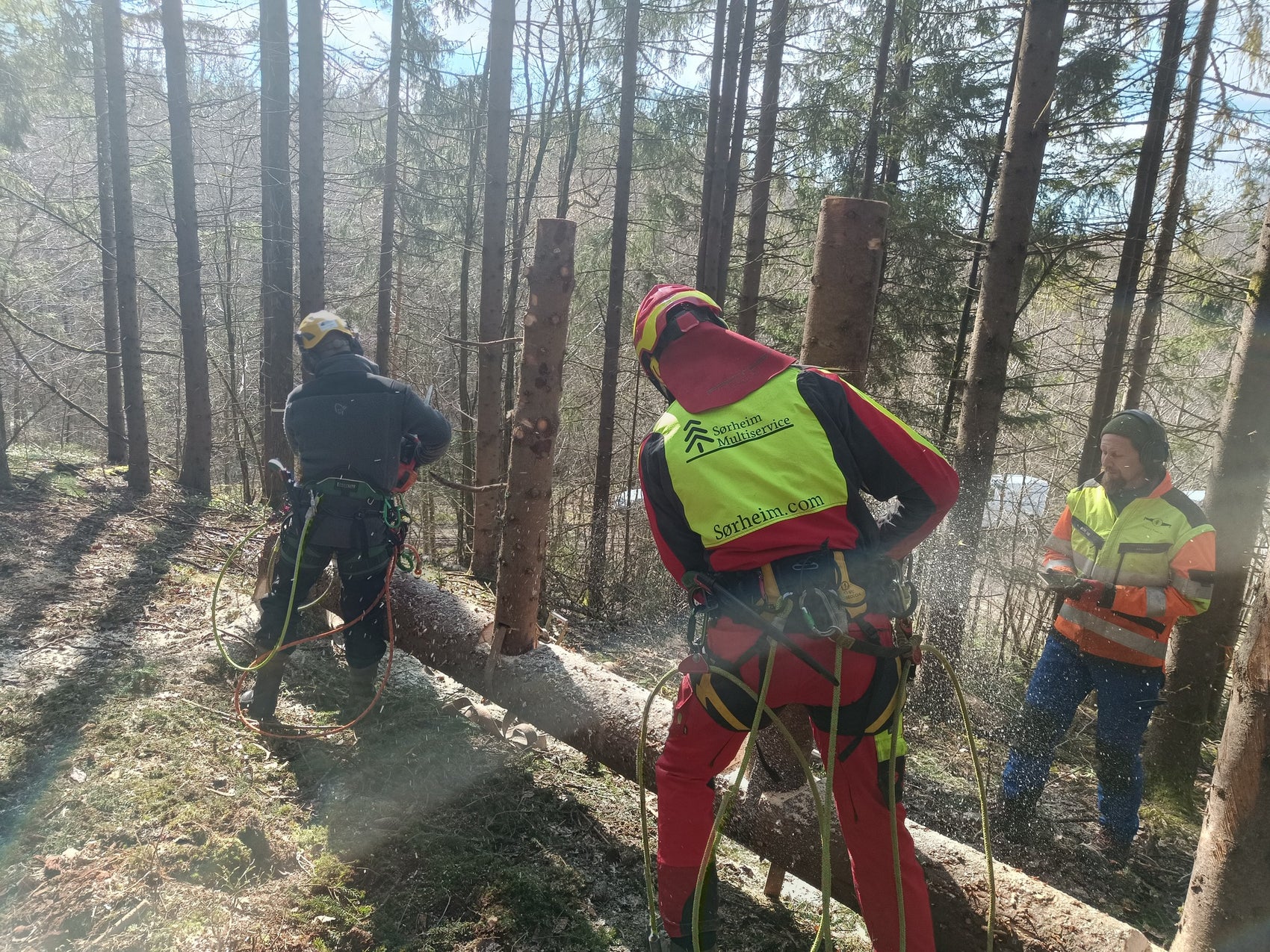
A clear definition of the assignment is therefore important. Some only want the tree felled, while others need a complete solution including trunk sectioning, cleanup, removal, and stump grinding. Once the desired final result is defined, it becomes easier to prepare a quote tailored to the property.
The size and structure of the tree
Height, trunk diameter, and crown size affect how much material needs to be handled. A large tree with a wide crown often has more heavy branches and larger trunk sections than a smaller tree. This may require more work operations during both felling and cleanup.
The structure of the crown is also important. A crown with large side branches, uneven weight distribution, or multiple trunks may place different demands on the work sequence than a straight, evenly developed tree. The tree species and the wood's properties can also affect how individual parts behave when cut and moved.
The tree's health and stability
A damaged or weakened tree can be more complicated to work with than a healthy tree. Dead branches, cracks, cavities, rot, or previous damage can reduce the strength of the trunk and crown. Such conditions must be assessed before deciding whether the work can be carried out from the ground, by climbing, or using other adapted methods.
Visible damage does not necessarily mean that the entire tree must be removed. A tree inspection can show that the risk is associated with specific branches or parts of the crown. In that case, targeted pruning or stabilization may be a more suitable measure than tree felling.
Distance to houses and thoroughfares
A tree standing in an open area can, in some cases, be felled completely in a planned direction. If it stands near a house, garage, road, patio, or neighboring property, the room for maneuver is smaller. In that case, it may be necessary to take down the tree in sections, so that branches and trunk sections can be handled in a controlled manner.
Section felling involves dismantling the tree into smaller parts instead of felling it completely from the ground. The parts can be secured and lowered with ropes and rigging as needed. This method requires more planning and more work operations, but makes it possible to handle trees where space is limited.
Access and terrain
Access affects the transport of personnel, equipment, and timber. Narrow gates, stairs, steep slopes, soft ground, or long distances to a staging area can make the work more extensive. The same applies when lawns, beds, or other parts of the outdoor area must be protected.
In Vestfold, conditions vary from dense residential areas and established gardens to parks, open spaces, and forests. A local inspection shows how the terrain and access affect the choice of method. It also provides an opportunity to plan the cleanup before felling begins.
The need for stabilization
Stabilization is used when the tree or parts of it must be controlled during the work. This may involve cordoning off the area, using ropes and rigging, or other measures that protect people, buildings, and vegetation. Which measures are necessary depends on the tree's condition and what is around it.
The working method should be chosen based on an overall risk assessment, not just based on what seems fastest. In professional tree felling in Vestfold, the goal is a planned execution tailored to the specific tree and work area.
Cleanup and handling of the timber
A felled tree leaves behind branches, limbs, and trunk sections. The scope of work depends on whether the material is to be left in place, cut up, or removed. The customer should therefore clarify what they want to keep and how tidy the area should be when the assignment is finished.
Cleanup is a separate part of the work and can be extensive with large trees. On an established property, it may also be necessary to consider how the material is transported out, so that the surroundings are subjected to as little impact as possible.
Stump grinding after tree felling
The stump is normally left behind after the tree is felled. If the area is to be used for a lawn, thoroughfare, planting, or other development, stump grinding may be relevant. During stump grinding, the stump is processed below ground level without having to dig up the entire root system.
The need depends on the location and plans for the area. A stump at the edge of a forest area may not be a problem, while a stump in the middle of a lawn can hinder maintenance and further use. Read more about when stump grinding in Vestfold should be considered.
Why is a tree inspection important before tree felling?
A tree inspection is a professional assessment of the tree's visible condition, structure, and surroundings. The trunk, crown, branches, and root zone are examined for signs of damage or weaknesses. At the same time, it is assessed what may be affected if a branch or part of the trunk fails.
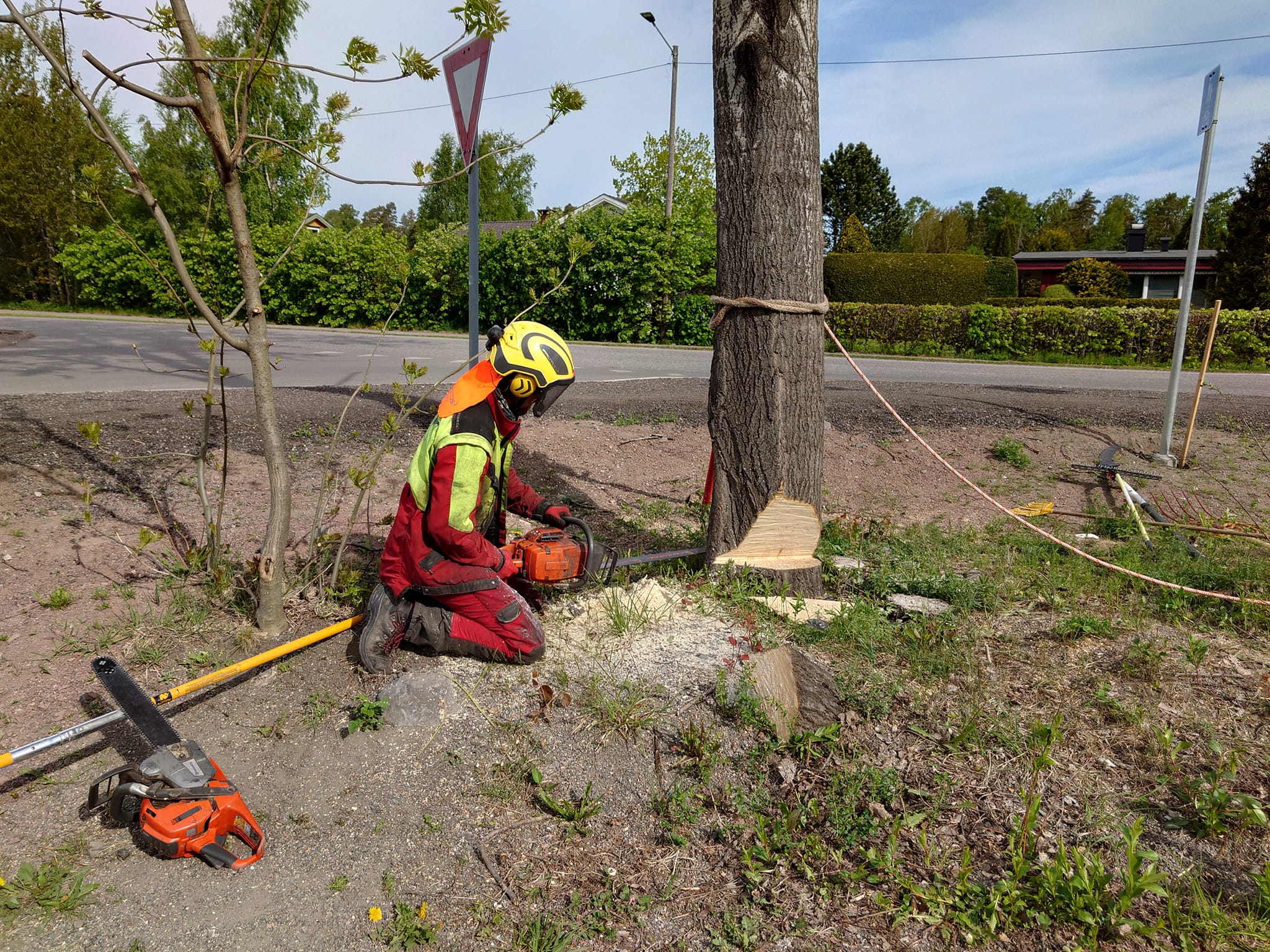
The inspection is used to clarify which measure is most appropriate. It not only provides a basis for planning a possible felling, but also for assessing whether the tree can be preserved. This is important because tree felling is one of several solutions in professional tree care.
The inspection clarifies the correct working method
The tree's lean, crown weight, and any weaknesses affect how the load is distributed. If the trunk has a crack, the crown contains dead sections, or the root zone has been affected by digging, it can have an impact on the execution. The tree inspection makes it possible to take such conditions into account before the work begins.
It is also assessed whether the tree can be felled completely, or whether it should be taken down in sections. In limited space, controlled section felling may be necessary. In other places, conditions may allow for a simpler execution from the ground.
Tree inspection can reveal alternatives to felling
If the problem is dead or low-hanging branches, pruning may be sufficient. During pruning, selected branches are removed to preserve structure, safety, and tree health. A professional intervention should also take into account the tree's natural form and aesthetic expression.
Crown reduction is a more targeted reduction of the crown's size or extent. The measure must be adapted to the tree species and the tree's condition, so that unnecessarily large wounds or an unbalanced crown are avoided. It is different from indiscriminate topping, where large parts of the crown are cut without sufficient consideration for further development.
Stabilization may also be relevant. This means that specific parts of the tree are supported or stabilized to reduce the risk associated with structural weaknesses. The measure requires a professional assessment and does not replace necessary follow-up.
Felling, pruning, and stabilization are different services
It is useful to distinguish between the different measures when you ask for an assessment. Tree felling involves taking down the entire tree. Pruning involves removing selected branches, while stabilization is used to support or control vulnerable parts of a tree.
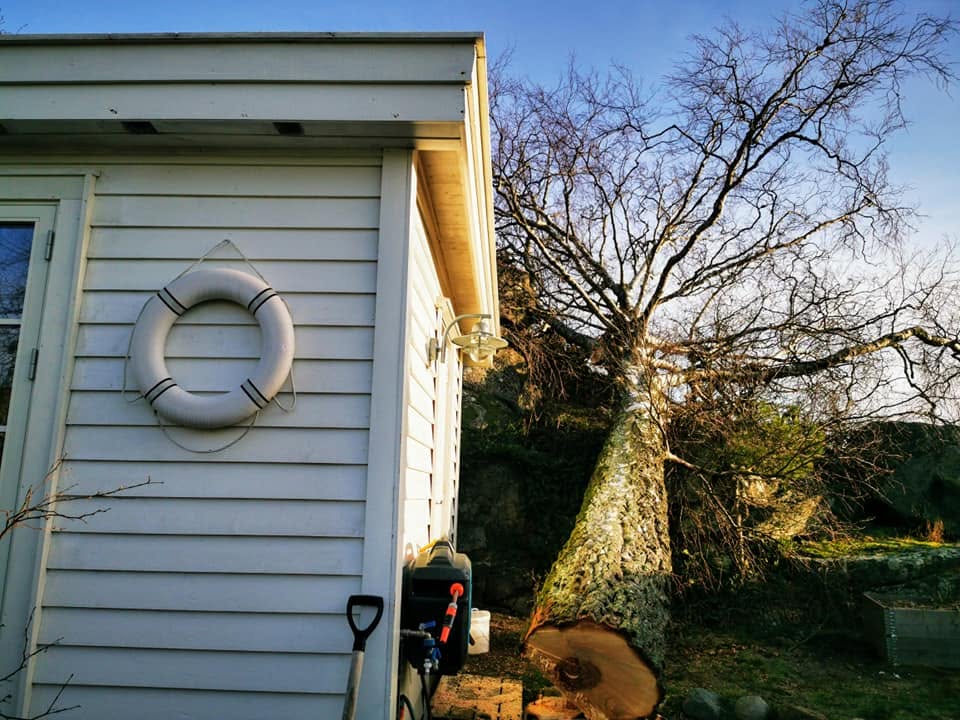
The choice should be based on the tree's condition, location, and value. A healthy tree that shades more than desired does not necessarily need to be felled. In some cases, thoughtful pruning can improve lighting conditions while preserving the tree's function in the outdoor environment.
Aesthetics are also part of professional tree care. Ordinary professional pruning should result in a natural and balanced crown, not just remove problematic branches. Anton’s Timber also offers aesthetic sculptural pruning, including Niwaki, which is a Japanese-inspired method for shaping trees over time.
Can tree felling price be assessed from photos?
Good photos and a detailed description can provide useful information in the initial dialogue. Photos of the entire tree, the trunk, the root zone, and the surrounding area can show size, location, and some visible damage. However, they may not always show the terrain, distances, and tree structure well enough for the entire assignment to be assessed.
An inspection is particularly relevant for large trees, visible damage, difficult access, or short distances to buildings and thoroughfares. Then both the tree and the work area can be examined more closely. At the same time, the customer gets an opportunity to clarify what they want done with the timber and the stump.
A professional assessment provides a better basis for a quote than general price examples. It makes the connection between the tree's condition, the chosen method, safety measures, and follow-up work clearer, without creating expectations based on an assignment with completely different conditions.
When should you ask for a consultation about tree care?
You should ask for a consultation if you are unsure whether the tree is stable or which measure is suitable. Dead branches, cracks, cavities, fungal growth, changed lean, and wind damage are examples of conditions that may be relevant to investigate. Digging, driving, and construction work near the root zone can also affect a tree.
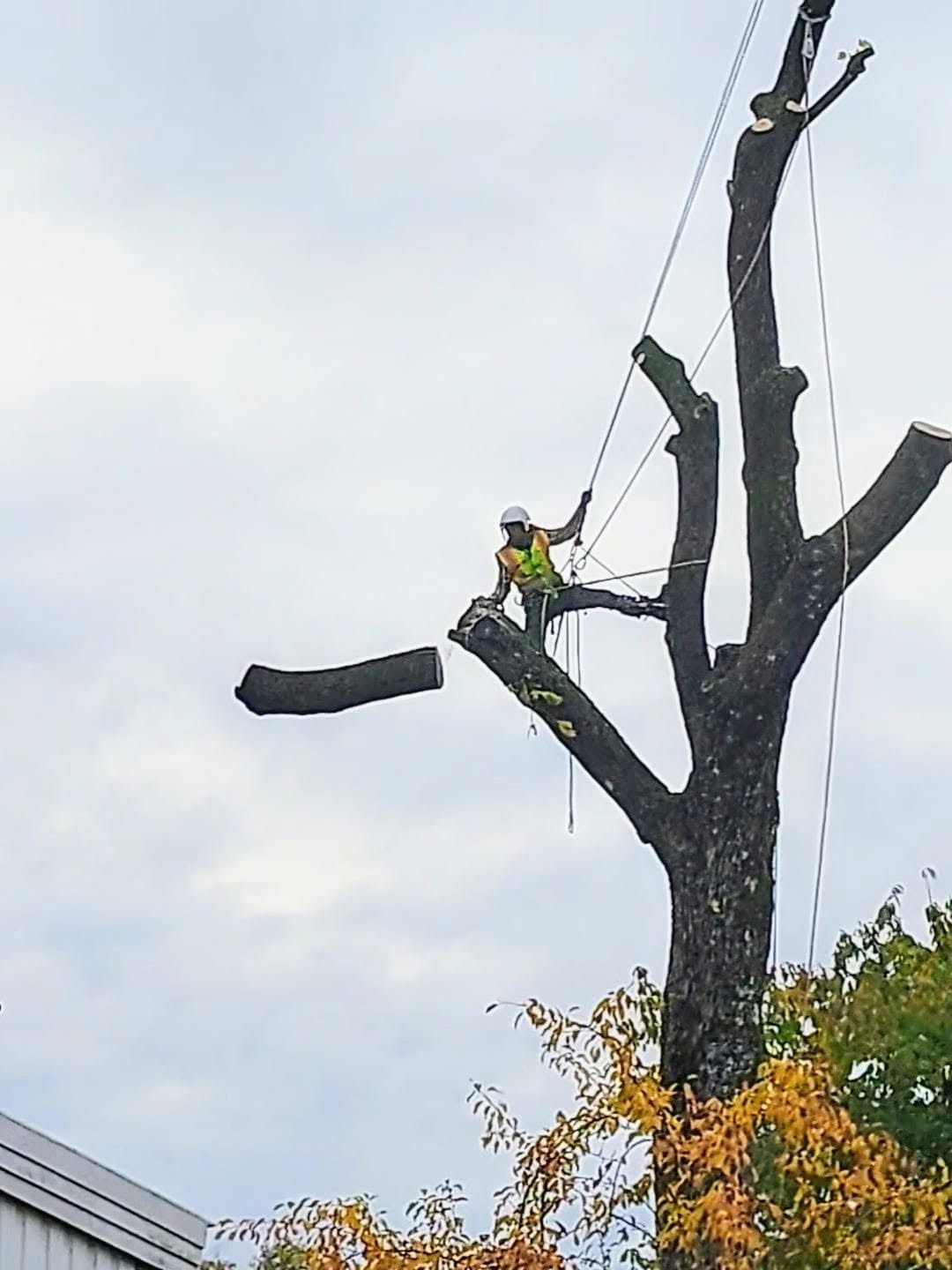
A consultation is also useful before major changes to the property. Trees can conflict with construction, new thoroughfares, or the development of outdoor areas. Early advice can clarify whether the tree can be preserved through adaptation, pruning, or stabilization, or whether tree felling is necessary.
On properties with multiple trees, a long-term plan for tree care in Vestfold may be appropriate. Then control, pruning, stabilization, planting, and possible felling can be assessed together. This is relevant for, among others, private individuals, homeowners, property managers, housing cooperatives, businesses, and public actors.
How to prepare a request for tree felling
Describe where the tree stands, approximately how large it is, and whether you have observed damage or changes. Also state the distance to buildings, roads, and other areas used by people. Information about gates, stairs, slopes, and other limited access is useful.
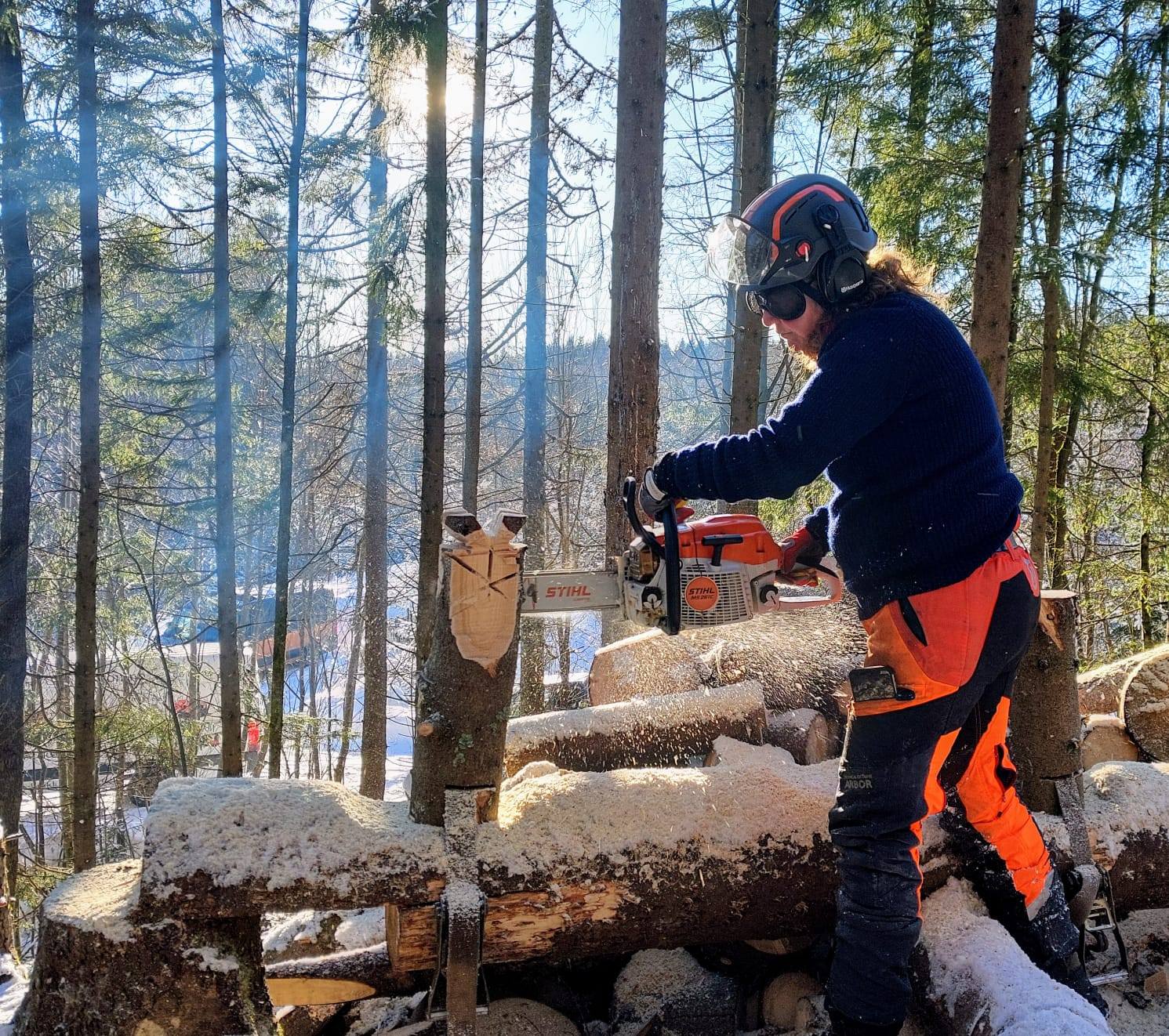
Feel free to send photos from several angles, but avoid going near a tree if you feel the situation is unsafe. State the desired final result: Should the timber be cut up, should branches and the trunk be removed, and do you want stump grinding and cleanup? The clearer the needs are described, the easier the initial assessment will be.
Professional tree inspection and tree felling in Vestfold
Anton’s Timber offers professional tree care services with a primary geographical focus in Vestfold. The services include consultation, tree inspection, pruning, stabilization, tree felling, planting, stump grinding, and cleanup. The work covers individual trees, parks, open spaces, and forests throughout the tree's life cycle, from establishment to the rehabilitation of veteran trees.
The company states European Tree Worker certification. An arborist is a professional who works with the establishment, assessment, and care of trees. This expertise is important when safety, tree health, and aesthetics must be assessed together, and when it needs to be clarified whether tree felling is actually the right solution.
If you want an assessment of tree felling price, the assignment should start with knowledge of the tree and the site. Contact Anton’s Timber for an inspection or consultation in Vestfold. Then the need for tree inspection, pruning, stabilization, tree felling, and follow-up work can be assessed together before you receive a quote tailored to the assignment.